Rural America's Streaming Raw Deal: Why Cord-Cutters Outside the City Pay More and Get Less
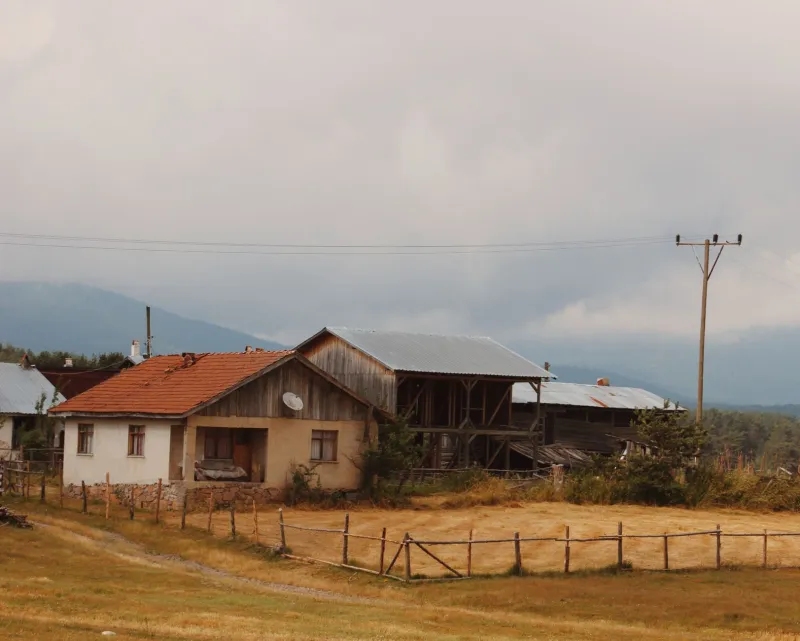
Drive about 45 minutes outside of any major American city and the streaming conversation changes completely. The glossy promises — unlimited 4K content, crystal-clear live TV, cancel-anytime flexibility — start bumping up against a harder reality. Towers are sparse. Fiber is a rumor. And the IPTV service that works flawlessly in a Denver apartment becomes a buffering nightmare in a farmhouse outside of Pueblo.
This isn't a niche problem. According to FCC data, roughly 21 million Americans still lack access to broadband speeds that meet the agency's own minimum threshold of 25 Mbps download — and that number is almost certainly undercounted, because ISPs self-report coverage and have a well-documented habit of overstating it. For cord-cutters in those areas, the pitch of "cut the cord and stream everything" lands somewhere between aspirational and insulting.
We talked to rural streamers across several states, dug into ISP coverage maps, and looked at what IPTV providers are actually offering — and not offering — outside of urban markets. What we found paints a picture that the streaming industry doesn't exactly advertise.
The Infrastructure Problem Nobody Wants to Own
Here's the core issue: 4K IPTV streaming, done right, requires a consistent connection of at least 25 Mbps for a single stream, with lower latency and higher stability demands than casual browsing. Most IPTV providers recommend 50 Mbps or better for reliable 4K with HDR. For households with multiple simultaneous streams, you're looking at 100 Mbps as a practical floor.
In urban and suburban America, those speeds are increasingly table stakes. Gigabit fiber from providers like AT&T, Google Fiber, and regional carriers is available to tens of millions of households. Cable internet from Comcast and Charter, while imperfect, delivers workable speeds to most metro areas.
Rural America operates in a different universe. Fixed wireless from providers like Viasat or HughesNet satellite — historically the only options for many rural households — caps out at speeds that make 4K streaming a coin flip, and latency figures in the 600ms+ range make live IPTV essentially unusable. Even Starlink, which has been a genuine game-changer for many rural users, introduces its own inconsistencies: speeds fluctuate significantly based on network congestion, weather, and how many subscribers are in a given cell.
"I'm paying $120 a month for Starlink and another $25 for an IPTV subscription," says Marcus, a small-scale farmer in rural Tennessee we spoke with. "On a good night, it's great. On a bad night, I'm watching a slideshow. My brother in Nashville pays $60 total for faster internet and a better IPTV plan. That math doesn't feel fair."
Provider Discrimination: It's Not Paranoia, It's Policy
Beyond raw infrastructure, there's a subtler problem: IPTV providers themselves frequently structure their offerings in ways that disadvantage rural users — sometimes explicitly, sometimes by omission.
Geographic content licensing is a real and frustrating factor. Local channel availability on IPTV services varies dramatically by market. A platform might carry all four major broadcast networks cleanly for users in Chicago but offer only a fraction of that lineup for someone in a rural zip code, because the licensing agreements were structured around designated market areas (DMAs) that don't always extend cleanly into rural territory.
Some IPTV providers go further, quietly throttling or deprioritizing streams to IP addresses associated with satellite or fixed wireless connections — not out of malice necessarily, but because those connection types historically generate more support tickets and churn. The result is that rural users on already-marginal connections sometimes get an even worse product than their bandwidth alone would suggest.
Data caps compound everything. Many rural internet options — fixed wireless, satellite, some rural DSL — come with monthly data caps that a 4K streaming habit will blow through in days. A single 4K HDR movie can consume 20–40GB depending on the platform and codec. A month of moderate IPTV watching can easily hit 300–500GB. For users on a 100GB monthly cap, 4K streaming isn't a lifestyle — it's a luxury that requires constant rationing.
What Rural Cord-Cutters Are Actually Doing
Despite all of this, plenty of rural Americans have found workable solutions. They're just having to be a lot more creative than their urban counterparts.
Dropping down to 1080p by default. Several rural streamers we spoke with have simply accepted that 4K isn't realistic for daily viewing and stream in 1080p or even 720p to preserve data and bandwidth. It's not the dream, but it keeps the experience stable. Many IPTV platforms allow per-device resolution caps in their settings — worth exploring if you're on a constrained connection.
Strategic Starlink placement and timing. Starlink performance varies significantly by time of day and physical dish placement. Rural users who've invested time in optimizing dish angle and scheduling heavy streaming during off-peak hours (typically late night) report meaningfully better results. The Starlink app's obstruction checker is genuinely useful here.
Leveraging community broadband where it exists. Rural electric cooperatives in several states — particularly in the Southeast and Midwest — have built out surprisingly robust fiber networks to their service areas. These co-op fiber networks often deliver urban-grade speeds at competitive prices to members. If you're in a rural area, it's worth checking whether your local electric co-op has a broadband arm.
Using IPTV providers with adaptive bitrate streaming. Not all IPTV services handle variable connections equally. Providers that implement genuine adaptive bitrate (ABR) streaming — dynamically adjusting stream quality based on available bandwidth in real time — deliver a far more stable experience on inconsistent connections than those that lock to a fixed bitrate. Ask providers directly about their ABR implementation before subscribing.
The Bigger Picture
The streaming industry loves to talk about democratizing entertainment — giving everyone access to the same content regardless of who their cable company is. But that democratization has a hard geographic boundary, and millions of rural Americans are on the wrong side of it.
The honest answer is that the infrastructure gap isn't something any IPTV provider or streaming platform is going to solve on its own. That's a policy problem, a funding problem, and a political will problem — and it's been getting slowly better thanks to programs like the BEAD (Broadband Equity, Access, and Deployment) initiative, which is directing $42.5 billion toward broadband expansion in underserved areas. But "slowly better" is cold comfort when you're paying triple for half the service right now.
If you're a rural cord-cutter, know that you're not doing something wrong. The system just wasn't designed with you in mind — yet. In the meantime, the workarounds above can meaningfully improve your experience. And the conversation about rural streaming equity is at least getting louder. That's a start.