100 Inches for the Price of a Mid-Range TV: The Projector Move Nobody Saw Coming
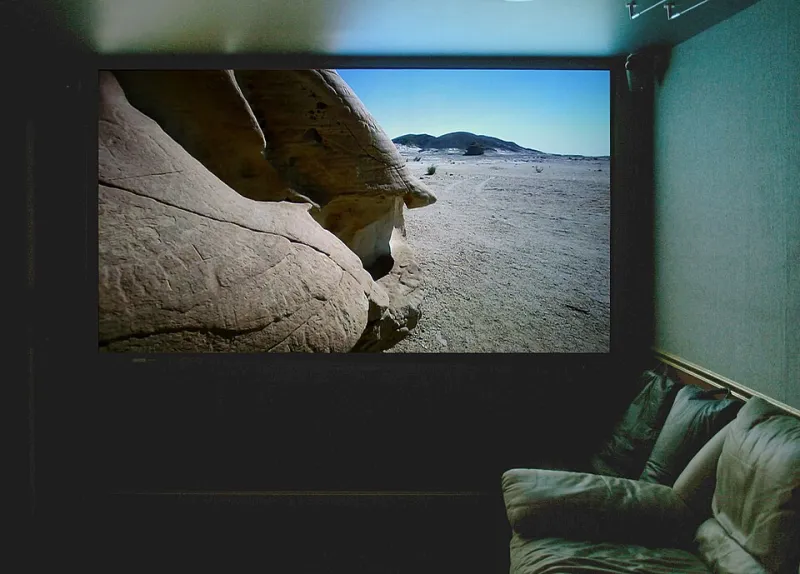
Photo: Unknown, Public domain, via Wikimedia Commons
Let me make an argument that would've sounded absurd three years ago: for most streaming setups, the TV is the wrong screen.
Not because TVs are bad — modern 4K panels are excellent. But because projector pricing has collapsed while brightness and processing have improved dramatically, and the math now favors going big. A 65-inch TV and a capable 4K projector often cost the same. One gives you a nice living room screen. The other gives you a theater.
Why the Price Collapse Changes Everything
The sub-$700 4K projector category barely existed in 2020. Today, models from Hisense, BenQ, ViewSonic, Epson, and a wave of Chinese brands (Wanbo, Formovie, JMGO) deliver genuine 4K or 4K-class pixel-shifting images, decent HDR processing, and — critically — built-in streaming platforms.
Hisense's C-series laser projectors, Epson's Home Cinema line, and BenQ's TK-series have all been reviewed to death by the enthusiast community, and the consensus is consistent: at $600 to $900, you're getting 85 to 90 percent of the big-brand TV experience on a screen twice the size.
The Honest Trade-Offs
Let's not pretend it's all upside. Here's what you're signing up for:
Ambient light is the enemy. A projector's picture competes with every lamp and window in the room. In a dark basement or a bedroom you can blackout, a 100-inch image is stunning. In a bright living room at 2 PM, it looks washed out. Light-rejecting screens help, but they add $200 to $500.
Sound needs help. Projector speakers are universally terrible — an afterthought at best. Budget for a soundbar or a used AVR and bookshelf setup. Consider it part of the deal, not a hidden cost; you'd want better audio on a big TV too.
Bulbs and fans. Lamp-based projectors need replacements every few thousand hours. Laser and LED models mostly eliminate this — another reason to stick with newer laser units in this price bracket.
Placement matters. Long-throw projectors need 10+ feet of distance. If that's not in the cards, short-throw and ultra-short-throw (UST) models sit inches from the wall — though UST pricing starts creeping toward TV money.
Building the Big-Screen Streaming Rig
The good news: you don't need to reinvent anything. Your projector is just a display, and your streaming stack plugs straight in.
Pick a projector with HDMI 2.0 or better — that's your ticket to full 4K60 with HDR from an external device. Then attach the same streaming box you already trust: an Apple TV 4K, a Shield, or a Fire TV Cube. External boxes sidestep the often-mediocre built-in apps on budget projectors and keep your apps, logins, and IPTV playlists in one place.
If your projector runs a native Android TV or Google TV build, test it before committing — app selection and update support vary wildly on the budget end.
The Setup That Actually Works
A realistic configuration that won't break the bank:
- Projector: Epson Home Cinema 2350 or BenQ TK710-class unit — $650 to $800
- Screen: A 100–120" fixed frame or even a painted wall to start — $50 to $250
- Audio: A Vizio or Samsung 3.1 soundbar on sale — $200 to $300
- Source: The streaming box you already own — $0
Total: somewhere between $900 and $1,300 for a 110-inch theater-grade experience. Compare that to a 75-inch mid-tier TV at similar money and the value proposition writes itself.
Who Should Skip It
Fair is fair: if your room can't go dark, if you watch mostly daytime content, or if you're a pixel-peeper who watches from three feet away, stick with a TV. A bright OLED in a sunny room will beat any projector in that specific fight.
But if your streaming hours skew toward evening — movies, sports, binge sessions — and you've got a wall and some distance to work with, the projector move is the single biggest upgrade available to your home theater per dollar. Going from 65 to 110 inches isn't a tweak. It's a different hobby.
The TV industry spent decades convincing us that bigger means richer. The projector just called that bluff.